
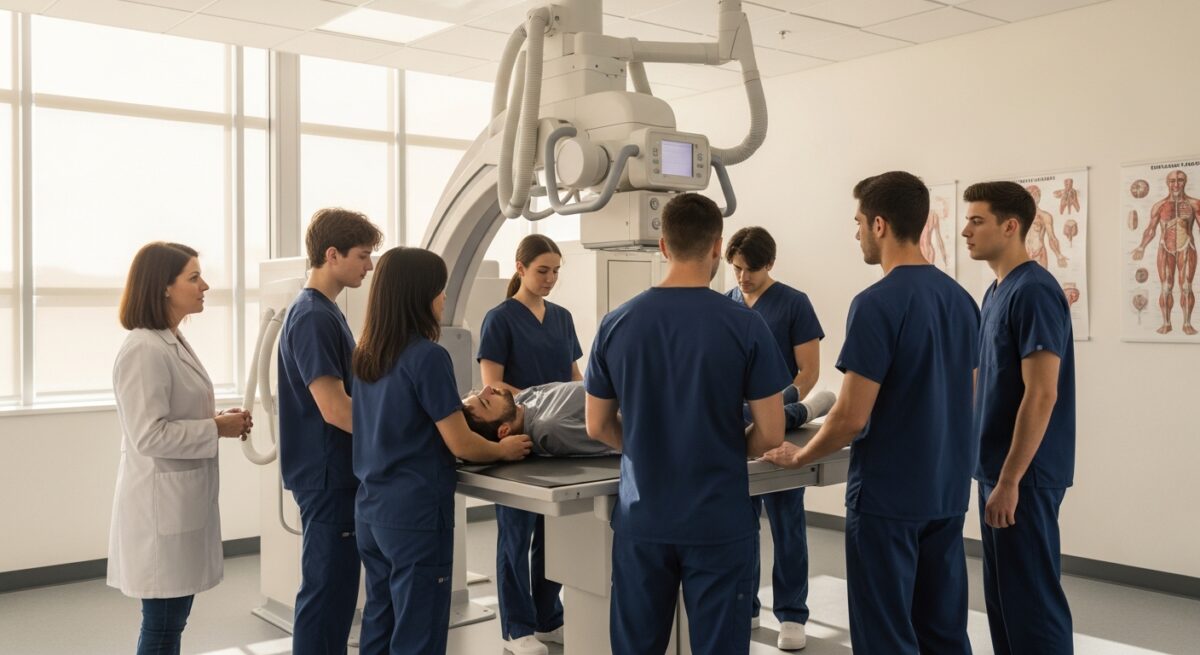
Radiologic technology is one of the fastest-growing allied health fields, with the U.S. Bureau of Labor Statistics projecting a 6 percent job growth through 2032. For career changers and working adults who cannot commit to a traditional four-year degree, accelerated radiology tech programs offer a direct path to certification and employment in as little as 18 to 24 months. These intensive programs compress classroom theory, laboratory practice, and clinical rotations into a rigorous schedule that demands focus but rewards graduates with immediate entry into a stable, well-paying profession.
Before enrolling, you need to understand how these programs differ from standard associate degrees, what accreditation requirements apply, and how to balance the accelerated pace with your personal responsibilities. This guide walks through every critical factor so you can make an informed decision and maximize your return on investment.
What Are Accelerated Radiology Tech Programs?
Accelerated radiology tech programs are condensed educational pathways that lead to an Associate of Applied Science (AAS) in Radiologic Technology or a certificate of completion. Traditional radiography programs typically require four semesters of coursework plus clinical hours, totaling about two years. Accelerated versions achieve the same outcomes in 18 months or less by eliminating summer breaks, increasing weekly contact hours, and requiring students to attend year-round.
Most accelerated programs require between 60 and 75 credit hours. The curriculum includes anatomy and physiology, radiation physics, patient care, image evaluation, and radiographic positioning. Clinical rotations at affiliated hospitals and imaging centers begin early in the program, often during the first semester, so students gain hands-on experience from the start.
Because the schedule is demanding, programs usually restrict enrollment to students who have completed prerequisite courses in subjects such as human anatomy, medical terminology, algebra, and English composition. Many schools also require a minimum GPA of 2.5 to 3.0 and a background check before admission.
Accreditation: The Non-Negotiable Requirement
When evaluating accelerated radiology tech programs, accreditation is the single most important criterion. Graduates must complete a program accredited by the Joint Review Committee on Education in Radiologic Technology (JRCERT) to be eligible for the American Registry of Radiologic Technologists (ARRT) certification exam. Without ARRT certification, you cannot work as a radiologic technologist in most states.
JRCERT accreditation ensures the program meets rigorous standards for curriculum, faculty qualifications, clinical resources, and student outcomes. You can verify a program’s accreditation status directly on the JRCERT website or by contacting the school’s admissions office. Avoid any program that claims to be “certified” by a non-recognized agency or that offers a degree without clinical placement.
Regional accreditation of the college or university itself is also important. Regionally accredited institutions are more widely recognized by employers, state licensing boards, and other educational institutions if you later decide to pursue a bachelor’s degree. In our guide on best colleges for technology majors: Uncommon Tech Programs, we highlight how accreditation affects both educational quality and career mobility.
Program Length and Format Options
Accelerated radiology tech programs come in several formats, each with distinct advantages and challenges. Understanding these differences helps you choose a path that fits your lifestyle and learning preferences.
Full-time on-campus accelerated programs are the most common. Classes meet four to five days per week, often from early morning until late afternoon. Clinical rotations add additional hours, sometimes including evening or weekend shifts. These programs require students to be physically present for lectures, lab sessions, and clinicals, which limits opportunities for outside work.
Hybrid accelerated programs combine online didactic instruction with in-person lab and clinical components. Lectures and coursework are delivered through a learning management system, allowing students to study at their own pace within weekly deadlines. Labs and clinicals still require on-site attendance, usually two to three days per week. This format appeals to students who need flexibility for work or family obligations.
Evening and weekend accelerated programs are designed for full-time workers. Classes meet during evenings and weekends, and clinical rotations are scheduled around students’ availability. These programs often take slightly longer than full-time day programs, typically 24 months instead of 18, but they allow students to maintain employment while studying.
Admission Requirements and Prerequisites
Accelerated radiology tech programs are selective due to the intensity of the curriculum. Common admission requirements include:
- High school diploma or GED with a minimum GPA of 2.5 or higher
- Completion of prerequisite college courses with a grade of C or better (typically 12 to 18 credit hours)
- Official transcripts from all previous institutions
- Letters of recommendation from academic or professional references
- A personal statement or essay explaining your interest in radiologic technology
- CPR certification (Basic Life Support for Healthcare Providers)
- Background check and drug screening
- Proof of immunizations and physical examination
Many programs require students to complete a minimum number of observation hours in a radiology department before applying. This gives applicants realistic exposure to the work environment and confirms their commitment to the field. Some schools also conduct interviews or administer a standardized entrance exam such as the TEAS or HESI.
If you lack prerequisites, consider completing them at a community college before applying. Online prerequisite courses are widely available and often transferable, but verify transferability with your target program in advance.
Cost and Financial Aid Considerations
Tuition for accelerated radiology tech programs varies significantly by institution type and location. Public community colleges typically charge between $5,000 and $15,000 for the entire program, while private nonprofit schools may cost $20,000 to $40,000. For-profit institutions sometimes charge even more, so research carefully before committing.
Beyond tuition, budget for textbooks, uniforms, radiation dosimeters, liability insurance, and certification exam fees. These ancillary costs can add $1,500 to $3,000 to your total expenses. Clinical rotations may also require transportation to multiple sites, which adds to your costs.
Financial aid options include federal Pell Grants, federal student loans, institutional scholarships, and employer tuition reimbursement programs. Complete the Free Application for Federal Student Aid (FAFSA) as early as possible to determine your eligibility. Some hospitals and imaging centers offer tuition assistance in exchange for a work commitment after graduation, which can significantly reduce your out-of-pocket costs.
For students seeking affordable pathways, CollegeDegree.Education’s matching service can help you compare accredited programs that fit your budget and geographic preferences. The platform prioritizes schools that offer competitive tuition and flexible payment plans.
Clinical Rotations and Hands-On Training
Clinical education is the backbone of any radiologic technology program. Accelerated programs require a minimum of 1,000 to 1,500 clinical hours, spread across multiple healthcare settings. Students rotate through departments such as emergency radiology, operating rooms, outpatient imaging centers, and mobile X-ray units.
During clinical rotations, you work under the supervision of registered radiologic technologists and radiologists. You perform procedures on actual patients, practice positioning techniques, operate X-ray equipment, and manage image processing. This real-world experience is essential for developing competence and confidence.
Programs with strong clinical affiliations give students exposure to diverse patient populations and imaging modalities. Some accelerated programs also offer rotations in computed tomography (CT) or magnetic resonance imaging (MRI) as part of the curriculum, which can make you more competitive in the job market.
Because accelerated programs compress clinical hours into a shorter timeframe, you may spend 30 to 40 hours per week at clinical sites during certain semesters. Plan your schedule accordingly and communicate with your clinical coordinator about any conflicts.
Career Outlook After Graduation
Radiologic technologists earn a median annual salary of approximately $65,000, according to the Bureau of Labor Statistics. Entry-level positions in hospitals, outpatient centers, and physician offices typically start between $50,000 and $60,000, with higher wages in metropolitan areas and specialized settings.
Graduates of accelerated programs are eligible to take the ARRT certification exam immediately after completing their degree. Passing this exam grants the credential RT(R), which is required for state licensure in most states. Some states have additional licensing requirements, so check with your state’s health department or radiation control program.
Career advancement opportunities include specialization in CT, MRI, mammography, nuclear medicine, or radiation therapy. Each specialty requires additional certification and often a post-primary pathway through ARRT. Many technologists pursue a bachelor’s degree in radiologic sciences or healthcare administration to qualify for supervisory or educational roles.
For those considering long-term growth, a bachelor’s degree can open doors to management positions and higher salaries. Some online degree completion programs accept transfer credits from accelerated associate programs, allowing you to continue working while earning your degree.
Frequently Asked Questions
Can I work while enrolled in an accelerated radiology tech program? Working during an accelerated program is challenging but possible if you choose a part-time evening or weekend format. Full-time accelerated programs typically require 40 to 50 hours per week for classes, labs, and clinicals, leaving little time for employment. If you must work, limit hours to 10 to 15 per week and choose a flexible employer.
What is the difference between an accelerated program and a traditional program? The main difference is time frame. Traditional programs take two academic years with summers off, while accelerated programs run continuously for 18 to 24 months. Accelerated programs have higher weekly contact hours and less downtime between semesters.
Are online accelerated radiology tech programs available? Fully online programs are rare because clinical rotations require in-person attendance. However, hybrid programs that deliver lectures online while requiring on-site labs and clinicals are increasingly common. These offer flexibility for students who live far from campus or have family obligations.
How do I choose the right program for me? Start by verifying JRCERT accreditation. Then consider program length, format, cost, clinical affiliations, and graduation rates. Visit the campus if possible, talk to current students and alumni, and review the program’s ARRT exam pass rate. A pass rate above 90 percent indicates strong preparation.
What happens if I fail a course in an accelerated program? Policies vary by school, but many accelerated programs require a grade of C or better in all core courses. If you fail a course, you may need to wait until the next cohort to repeat it, which can delay graduation. Some programs offer tutoring or academic support to help students stay on track.
Making Your Decision
Accelerated radiology tech programs offer a fast, focused route to a rewarding healthcare career. The key is choosing a program that is accredited, fits your schedule and budget, and provides strong clinical training. Take time to research multiple options, talk to admissions counselors, and assess your own readiness for an intensive educational commitment.
Once you complete an accredited program and pass the ARRT exam, you join a profession with strong demand, competitive pay, and opportunities for advancement. Whether you are starting a new career or pivoting from another field, the investment in an accelerated program can pay dividends for decades. For personalized guidance and access to accredited programs that match your goals, visit DegreesOnline.Education to explore your options and connect with schools that prioritize student success.