
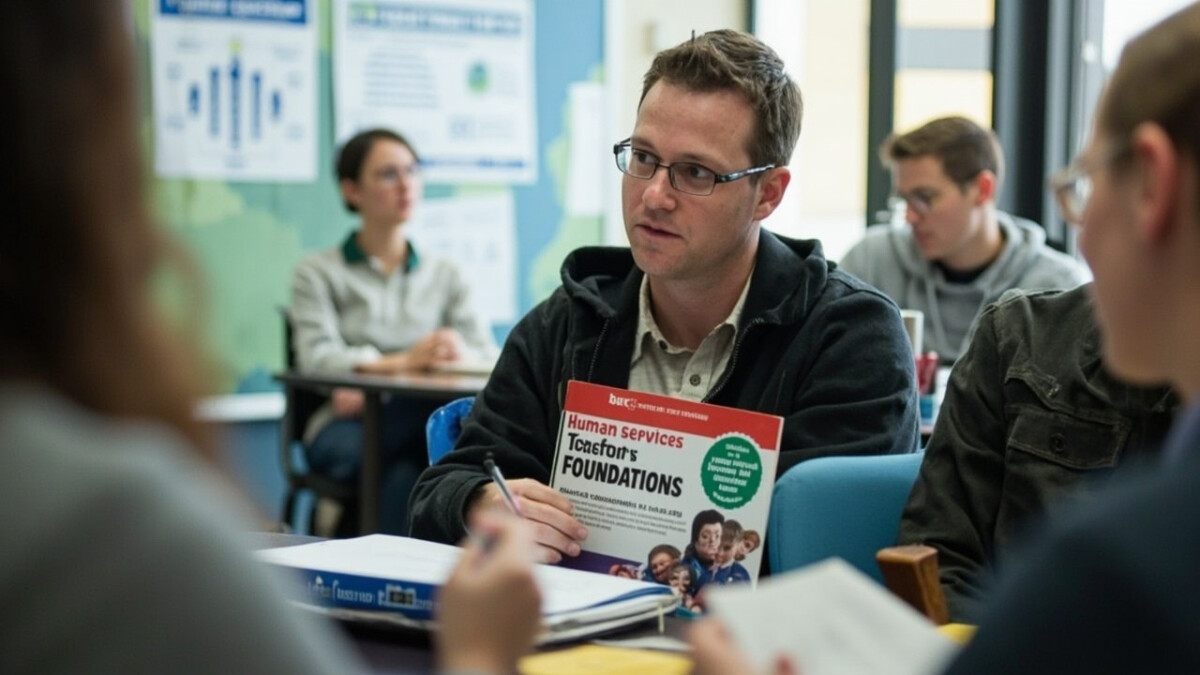
An associate degree in social work is a two-year undergraduate degree that prepares students for entry-level roles in human services, case management support, and community outreach. This credential is often the first step for individuals who want to help vulnerable populations but are not yet ready to commit to a four-year bachelor’s program. Many students earn this degree at community colleges or online institutions, then transfer into a Bachelor of Social Work (BSW) program to pursue full licensure as a social worker. Understanding what an associate degree in social work offers, how it differs from higher-level degrees, and what career paths it unlocks is essential for anyone considering a future in this rewarding field.
The demand for social and human service assistants is projected to grow significantly over the next decade, driven by an aging population and increasing need for mental health and substance abuse services. An associate degree in social work positions graduates to enter this expanding job market quickly, often with lower tuition costs and shorter completion times than a bachelor’s degree. For career changers, working adults, and parents seeking flexibility, this degree provides a practical on-ramp to a profession centered on advocacy and social justice.
What Exactly Is an Associate Degree in Social Work?
An associate degree in social work is an academic credential awarded after completing roughly 60 credit hours of study, typically over two years of full-time enrollment. It is classified as a terminal associate degree for some job roles, but it also functions as a transfer degree for students who plan to earn a BSW later. The curriculum blends general education requirements with introductory social work courses covering human behavior, social welfare policy, ethics, and case management fundamentals.
Students in an aa in social work program learn core skills such as active listening, cultural competence, crisis intervention, and documentation. Unlike a BSW, which includes advanced clinical training and field placements, the associate degree focuses on foundational knowledge and supervised practical experience. Most programs require a capstone project or a practicum where students work under licensed social workers in community agencies, nursing homes, or nonprofit organizations.
AA in Social Work vs. AS in Social Work
Two common acronyms appear when researching this degree: AA (Associate of Arts) and AS (Associate of Science). The AA track typically emphasizes liberal arts courses like sociology, psychology, and communication, making it ideal for students who plan to transfer to a four-year university. The AS track leans more toward research methods, statistics, and biological sciences, which can be beneficial for students interested in evidence-based practice or later pursuing a master’s degree. Both pathways fulfill the same entry-level employment requirements, so the choice depends on your academic goals and intended transfer institution.
Core Curriculum and Skills You Will Gain
A social work associate degree program covers several key subject areas designed to build a strong ethical and practical foundation. Typical courses include Introduction to Social Work, Human Behavior in the Social Environment, Social Welfare Policy, Case Management, and Diversity and Social Justice. Students also complete general education requirements in English composition, mathematics, and natural sciences.
Beyond academic knowledge, graduates develop transferable skills that employers value highly. These include:
- Communication skills: Writing case notes, conducting intake interviews, and advocating for clients with other service providers.
- Critical thinking: Assessing client needs, identifying community resources, and evaluating intervention outcomes.
- Ethical decision-making: Applying the NASW Code of Ethics to real-world dilemmas involving confidentiality, informed consent, and boundary setting.
- Organization and documentation: Maintaining accurate records, managing caseloads, and meeting regulatory reporting requirements.
- Crisis intervention: De-escalating tense situations, connecting individuals to emergency services, and providing immediate emotional support.
These competencies prepare graduates to function effectively in fast-paced human service environments where they must balance empathy with professional detachment. Many programs also incorporate training in electronic health records systems and basic data analysis, reflecting the increasing role of technology in social work practice.
Career Opportunities with a Social Work Associate Degree
Graduates with a social work associate degree qualify for several entry-level positions that do not require a bachelor’s degree. The most common job titles include social and human service assistant, case management aide, community outreach worker, residential counselor, and intake specialist. These roles exist in settings such as state and local government agencies, nonprofit organizations, hospitals, nursing care facilities, and substance abuse treatment centers.
The Bureau of Labor Statistics reports that social and human service assistants earn a median annual wage of roughly $38,000, with the top 10 percent earning over $55,000. Job growth for this occupation is projected at 12 percent from 2022 to 2032, much faster than the average for all occupations. This strong demand reflects the ongoing need for support staff who can handle administrative tasks, client intakes, and referral coordination, freeing licensed social workers to focus on clinical interventions.
For those who wish to advance, an associate degree serves as a stepping stone. Many community colleges have articulation agreements with four-year universities, allowing graduates to transfer all credits into a BSW program and complete the bachelor’s degree in two additional years. This pathway is particularly appealing for students who want to minimize student debt while still pursuing a career that requires full licensure.
Online and Flexible Learning Options
Many accredited institutions now offer the social work associate degree fully online, catering to working adults, military personnel, and students with family responsibilities. Online programs typically use asynchronous coursework, allowing students to watch lectures and complete assignments on their own schedule. Some programs also offer synchronous components, such as live discussion sessions or virtual office hours with instructors.
When evaluating online options, it is critical to verify that the program holds regional accreditation and, ideally, accreditation from the Council on Social Work Education (CSWE). While CSWE accreditation is not mandatory for associate-level programs, it ensures that the curriculum meets national standards and that credits will transfer smoothly to CSWE-accredited BSW programs. Prospective students should also inquire about field placement requirements, as online programs often require students to arrange a local practicum site with approval from the program coordinator.
For students exploring multiple educational pathways, our complete guide to the Bachelor of Social Work degree explains how associate-level credits transfer, what advanced standing options exist, and how to choose a program that aligns with your career goals. Understanding the full spectrum of social work education helps you make informed decisions about your academic journey.
How to Choose the Right Program
Selecting a social work associate degree program requires careful research across several dimensions. Start by verifying the institution’s accreditation status through the U.S. Department of Education’s database. Regional accreditation is non-negotiable, as it affects financial aid eligibility and credit transferability. Next, examine the program’s curriculum to ensure it covers core social work competencies and offers a supervised field experience.
Consider the program’s graduation rate, job placement statistics, and the types of agencies that host student practicums. Reach out to current students or alumni through LinkedIn or college forums to ask about their experiences. Also, review the cost, including tuition, fees, books, and any technology requirements for online programs. Many community colleges offer tuition rates significantly lower than four-year universities, making the associate degree an affordable entry point.
Finally, confirm that the program aligns with your long-term goals. If you plan to pursue a BSW, ask about transfer agreements with specific universities. If you intend to enter the workforce immediately, look for programs that emphasize practical skills and career services support. Some schools offer job placement assistance or partnerships with local human service agencies, which can simplify the transition from classroom to career.
Frequently Asked Questions
Can I become a licensed social worker with an associate degree?
No, most states require a Bachelor of Social Work (BSW) or a Master of Social Work (MSW) for licensure as a clinical social worker. However, an associate degree qualifies you for positions such as social service assistant or case management aide, which do not require a license. Some states offer a certified social work assistant credential for associate degree holders.
How long does it take to complete an associate degree in social work?
Full-time students typically finish in two years (four semesters). Part-time students may take three to four years, depending on the course load. Accelerated programs that offer eight-week courses can shorten the timeline to 18 months.
Is an online associate degree in social work respected by employers?
Yes, as long as the program is regionally accredited. Employers focus on the degree’s accreditation and the skills you demonstrate, not the delivery format. Online degrees from accredited community colleges are widely accepted.
What is the difference between an associate degree in social work and a human services degree?
Social work degrees emphasize clinical theory, ethics, and intervention strategies aligned with the social work profession. Human services degrees are broader, covering administrative, counseling, and community support roles. Both can lead to similar entry-level jobs, but social work degrees are more structured for transfer into BSW programs.
Can I work while earning my associate degree online?
Many online programs are designed for working students. Asynchronous classes allow you to study evenings and weekends. However, field placement requirements may require daytime availability, so plan ahead if you work a full-time job.
An associate degree in social work is a practical, affordable, and flexible entry point into a profession dedicated to helping others. Whether you plan to start your career immediately after graduation or use it as a stepping stone to a BSW or MSW, this credential opens doors to meaningful work in human services. By choosing an accredited program that fits your lifestyle and goals, you can take the first confident step toward making a difference in your community. For more guidance on matching your interests with accredited programs, explore the tools and resources available through CollegeDegree.Education to find options that align with your career aspirations and financial situation.
As you weigh your options, consider speaking with academic advisors at multiple institutions, requesting program handbooks, and attending virtual open houses. The investment you make in researching programs now will pay dividends in career satisfaction and educational success later. The field of social work needs dedicated professionals at every level, and an associate degree is often the most accessible way to begin that journey. Learn more